
Guiding your clients to reduce higher education costs
Higher education benefits can extend beyond monetary earnings — but they also require significant investments of time and money. Your Advisor Relationship Management Team at my529 has prepared some suggestions you may use to help your clients extend their savings as their student nears graduation from high school.

Consider encouraging clients to include their student in discussions with you about future educational and financial goals. You could use the College Savings Estimator to visually demonstrate the principles of compounding growth, in addition to how reduced costs now can allow for more financial flexibility and security later.
Taking the time to have strategic conversations with your clients and their student is a wonderful opportunity to build a foundation of trust and shared respect with the next generation of clients that can continue to deepen over time. The following ideas may help those students meet their education savings goals and graduate with an excellent understanding of the importance of financial planning.
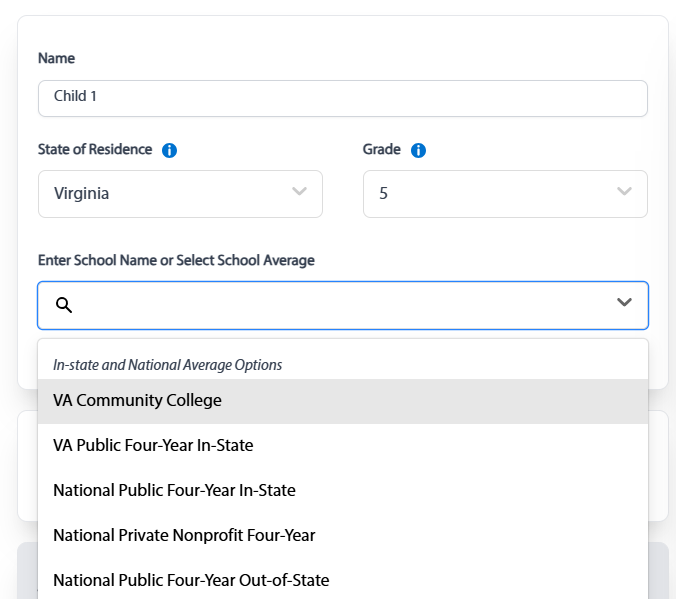
Explore various fields of study while earning general education credits at a discount. One of the best ways to boost educational return on investment is to cut tuition costs from the start. Think about pursuing extra credits during high school or over the summer between semesters, with options like College-Level Examination Program tests or community college courses. These lower-cost alternatives allow you to explore various fields and feel more confident in your chosen career path — while potentially shortening your graduation timeline. You can contrast the costs within the College Savings Estimator by selecting your state of residence to compare your average community college costs against public in-state tuition.

Choose your program thoughtfully. An unfinished degree or certificate can be costly in time and money. Carefully research your preferred career and the jobs you are interested in to determine if you could get sufficiently trained with a recognized postsecondary credential, registered apprenticeship or two-year program. If your path requires a four-year degree, consider starting out at a less expensive in-state public school before transferring to your final program. Once you have determined an education plan that aligns with your skills and dreams, school counselors can offer guidance on current job market demand and suggest strategies to help you score that increasingly critical internship or first job.
Fill out the FAFSA — even if you think you won’t qualify for aid. The Free Application for Federal Student Aid (FAFSA) is often a prerequisite to be considered for other merit-based scholarships and the sooner you complete it, the more funds still available. Plus, the calculation factors changed in recent years, which may be to your benefit, so check this one off your to-do list today.
Negotiate the school’s offer package. If you receive a more generous offer from another school, let your preferred institution know and they may be able to try to match it. Private schools often have more available aid to provide, so don’t let the sticker price shock you; apply and see what they offer. Finally, review the fine print to make sure that any aid or scholarships aren’t limited to just your first year, but if so, see if you can get that aid to continue annually.
Graduation gifts from family and friends can go a long way. You can help loved ones set up automatic contributions to the account or enroll in the my529 Gift Program, where they can easily and securely support your savings efforts. Don’t forget that anyone can contribute to a my529 account whether they have an account with my529 or not. Distributing your customized gift profile with your graduation invitation can offer loved ones an opportunity to contribute to the student’s future knowing that the money will go toward qualified education expenses, which may bring them additional peace of mind.
Saving need not stop freshman year. The earlier you begin saving, the more potential your my529 account has to grow. But the rewards are clear with a shorter runway as well — student loans can be a burden on your future. Every dollar saved now means money you won’t have to borrow and pay interest on later, plus reduced opportunity costs. Create a savings projection with the College Savings Estimator to visualize contributions and goals factoring in costs like books and personal expenses. Working while attending school can help, but also consider that time spent applying for scholarships and grants can have a higher return than working extra hours at a campus job. And don’t forget that any funds still in your account after graduation can help kick-start your retirement savings thanks to the Roth IRA rollover option.
