
Your Guide to my529
What is a 529 plan?
529 plans are designed to encourage saving for future education costs.
my529 was created by the Utah state legislature in 1996. We are a nonprofit, self-supporting agency that administers a public trust. Earnings in a 529 account grow deferred from federal and state taxes. Withdrawals are tax-free when used for certain education costs known as qualified education expenses.
my529 has been helping families save for education for 30 years.
In that time, we have refined our process to make it simple and secure for you to open and manage your account.
The tabs below will walk you through all you need to know about my529.
We’ll show you how to invite family and friends to help fund your beneficiary’s education, guide you through withdrawing your funds once you are ready, and describe the qualified education expenses so you can take advantage of the tax benefits of a my529 account.

You’re in control
my529 is direct-sold, which means you can open a my529 account on your own.
A financial advisor isn’t necessary. Although, many account owners do use financial advisors, and my529’s platform integrates with many of the applications advisors use.
You choose the beneficiary. The beneficiary of your account can be yourself, a member of your family or anybody who has a valid Social Security or Tax Identification Number. You can also change the beneficiary any time you want. Account owners, not the beneficiary, control their accounts.
You choose your investment option. As an account owner, you get to pick from a diverse array of investment options. You can even design your own. However, you’re not locked into any investment decision — you can make up to two investment option changes per calendar year.
You get to pick when and how much you contribute. It’s free to open an account. Whether you contribute once, or set up automatic deposits, the choice up to you. Additionally, my529 makes it easy for family and friends to contribute through our secure gifting site.
You decide when to withdraw your funds — and where they’re spent. As account owner, you stay in control of the account. When it comes to withdrawing funds, it’s you — not your beneficiary — who’s in charge of where, when and how much.
You get the tax benefits (even if someone else contributes).

Tax advantages
Incentive to save for the future.
🡰
Get familiar with the tax advantages of a my529 plan.
You contribute to a my529 account using after-tax dollars.
Earnings grow tax-deferred, and you pay no income tax on earnings if the withdrawals are spent on qualified education expenses.
If you withdraw money for things other than qualified education expenses, it will be considered a nonqualified withdrawal. Nonqualified withdrawals will be subject to federal and state income tax on the earnings portion of the withdrawal and, in most instances, a 10% federal tax penalty.

For more information on the tax considerations of a my529 plan, head to our tax advantages page.
Gift tax benefits
Account owners or those gifting funds to a my529 account can contribute up to $19,000 to a beneficiary a year before they are subject to a gift tax. What’s more, a provision of 529 plans allows an individual to make a lump-sum gift of up to $95,000 in one year (or $190,000 if filing jointly). For more information on gift taxes, please see our tax advantages page.
Estate tax considerations
Generally, money held in an account is not considered part of the account owner’s estate, even though the account owner remains in control of the money.
Utah state income tax benefits
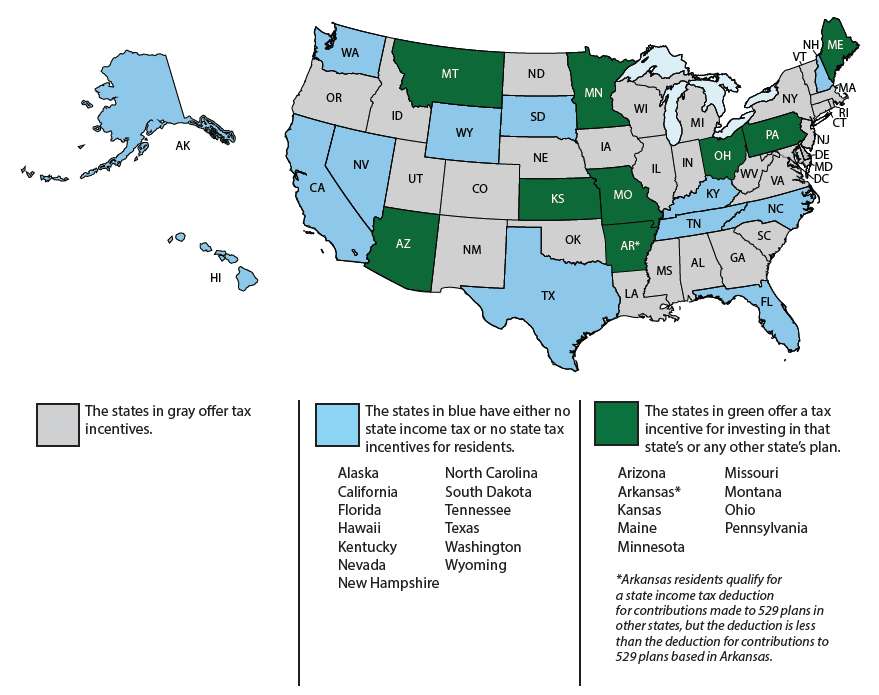
Utah taxpayers may claim a Utah state income tax credit up to certain limits on contributions to their account(s).
Does your state’s 529 plan offer tax incentives? Make sure to check.
Fees
my529 has some of the lowest fees in the 529 industry.
my529’s Asset-Based Fee structure has two parts:
- The Underlying Fund Expenses of the underlying investments.
- The my529 Administrative Asset Fee, which pays for my529’s operating expenses.
Together these make up the total annual Asset-Based Fee for your my529 account.

For a more detailed look at my529’s fee structure, head to our fees and expenses page.
Investment options
my529 offers an array of investment options
and each option uses a different investment strategy.
🡰
Watch to get an overview of what investment options are available with my529, then read on below.
Target Enrollment Date
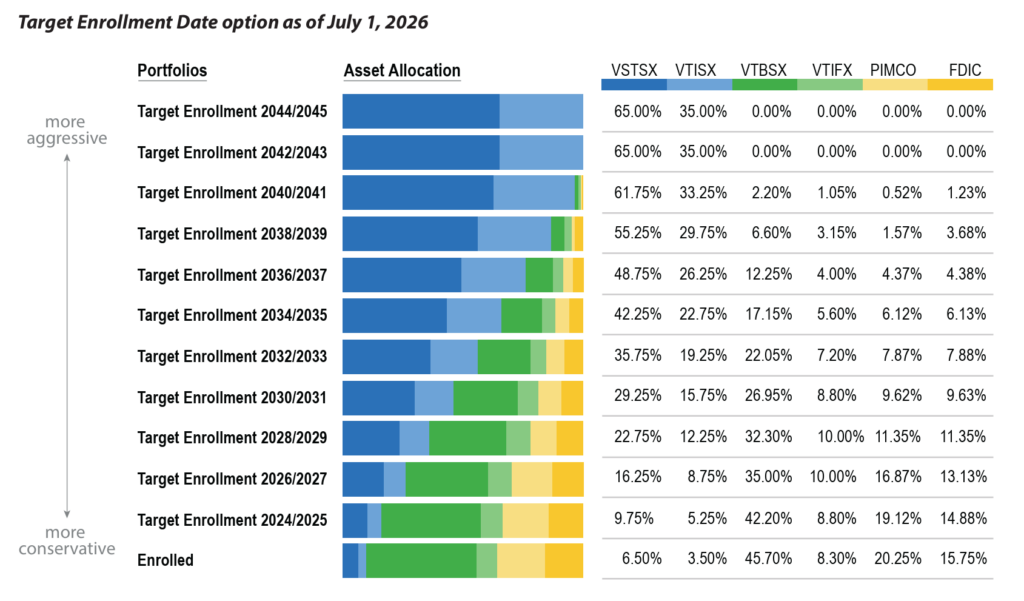
The Target Enrollment Date investment option consists of 12 portfolios that reallocate to a more conservative investment allocation each quarter. You may select a portfolio closest to the year you anticipate the account beneficiary will begin making withdrawals for education expenses. Depending on your risk tolerance, you may select a Target Enrollment Date portfolio farther from or nearer to the expected date of school enrollment. Portfolios closer to expected enrollment will feature more conservative allocations, while those farther away will feature more aggressive allocations. Explore our Target Enrollment Date portfolios.

Static Options
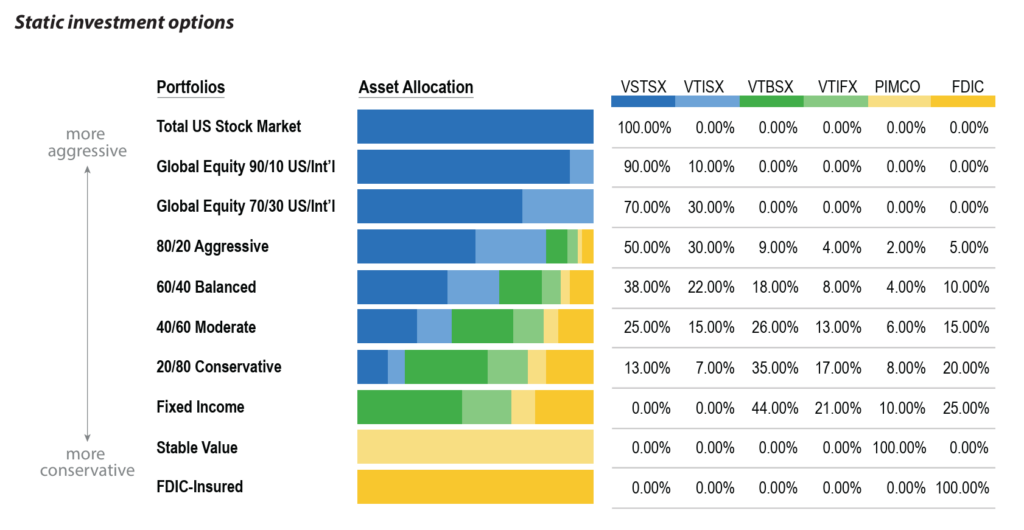
my529 has 10 Static investment options that range from aggressive to conservative portfolios. Static investment options do not change or adjust like the Target Enrollment Date portfolios. However, you can request an option change up to two times per calendar year and move your invested funds into another investment option. Explore our Static investment options.
Customized Age-Based
The Customized Age-Based investment option allows you to determine and create your own investment allocation using any combination of the 31 available my529 underlying funds for each of 10 age brackets.
Money invested in the Customized Age-Based option automatically reallocates to the new investment allocation that you have chosen when your beneficiary ages to the next bracket. Explore our Customized Age-Based portfolios.
Customized Static
The Customized Static investment option allows you to determine and create your own investment allocation using any combination of the 31 available underlying funds.
This option will not change as your beneficiary ages, unless you request an investment option change. Explore our Customized Static portfolios.


Changing your investment option
The IRS allows for up to two investment option changes per calendar year. You can easily update your investment option in your online account.
For more information and resources on investment options at my529, head to our investment options page.
Qualified expenses
Once you have reached the end of your saving journey, how can you spend your funds?
Here’s a quick list of the flexible ways your 529 funds can go toward your beneficiary’s education:
- Tuition and mandatory fees.
- Books, supplies and required equipment.
- Room and board for students enrolled at least half-time.
- Computers, peripheral equipment, educational software and internet access.
- Costs for registered apprenticeships, including fees, books, supplies and equipment required for participation.
- K-12 expenses at public, private or religious schools (subject to certain limits).
- Payments on qualified education loans for the beneficiary or a sibling of the beneficiary (subject to certain limits).
- Qualified postsecondary credentialing expenses (subject to certain limits).

For more information on how you can use your my529 funds
to pay for your beneficiary’s education needs, head to our Qualified Expenses page.
Nonqualified expenses
What happens if funds are used on anything other than qualified education expenses?
The earnings portion of a nonqualified withdrawal is subject to federal income tax and, for Utah residents, Utah state income tax.
The earnings portion of a nonqualified withdrawal is also subject to an additional 10 percent federal tax penalty, except in limited circumstances.
An account owner who is a Utah taxpayer must pay Utah state income tax on the earnings portion of a nonqualified withdrawal in addition to paying federal income tax and penalties. The Utah account owner must also add back the amount of the nonqualified withdrawal — to the extent used in calculating the tax credit or deduction — as income on their Utah state income tax form for the taxable year the nonqualified withdrawal was made.

Ready to sign up?
Here are your next steps:
Gather basic information
To get set up, you’ll need basic information for both the account owner and beneficiary. This includes Social Security numbers, birthdates, addresses and more. See the full list of required information here.
Choose an investment strategy
my529 offers a variety of investment options — 12 Target Enrollment Date portfolios, 10 Static options and two Customized options. You decide how aggressive you want to be with your investment based on your goals and how much time you have to save.
Read the Program Description and open an account
If you are opening an account, please carefully read the Program Description to understand the risks associated with investing in my529.
Make a contribution — or don’t
You can contribute to your my529 account in several different ways. However, no initial contribution is required to open an account.

Finished sightseeing?